Dr. Vishal Kundnani
MS (Ortho) FASSI, FNUS, FNAMS.Dedicated slipped disc specialist and spine surgeon in Mumbai.


What Is a Slipped Disc (Herniated Disc)?
Being told you have a "slipped disc" can sound scary.
Many patients immediately worry about surgery or long-term disability.
The truth is, most slipped discs are treatable without surgery, and many people recover fully with proper care.
Quick Answer: What Is a Slipped Disc?
- A slipped disc happens when a spinal disc bulges or ruptures
- The disc presses on nearby nerves
- It can cause back pain, leg pain, numbness, or tingling
- Most cases improve with non-surgical treatment
What Is a Spinal Disc?
Spinal discs are soft cushions located between the bones of the spine (vertebrae).
They:
- Absorb shock
- Allow movement
- Protect spinal nerves
Each disc has:
- A soft center
- A tough outer covering
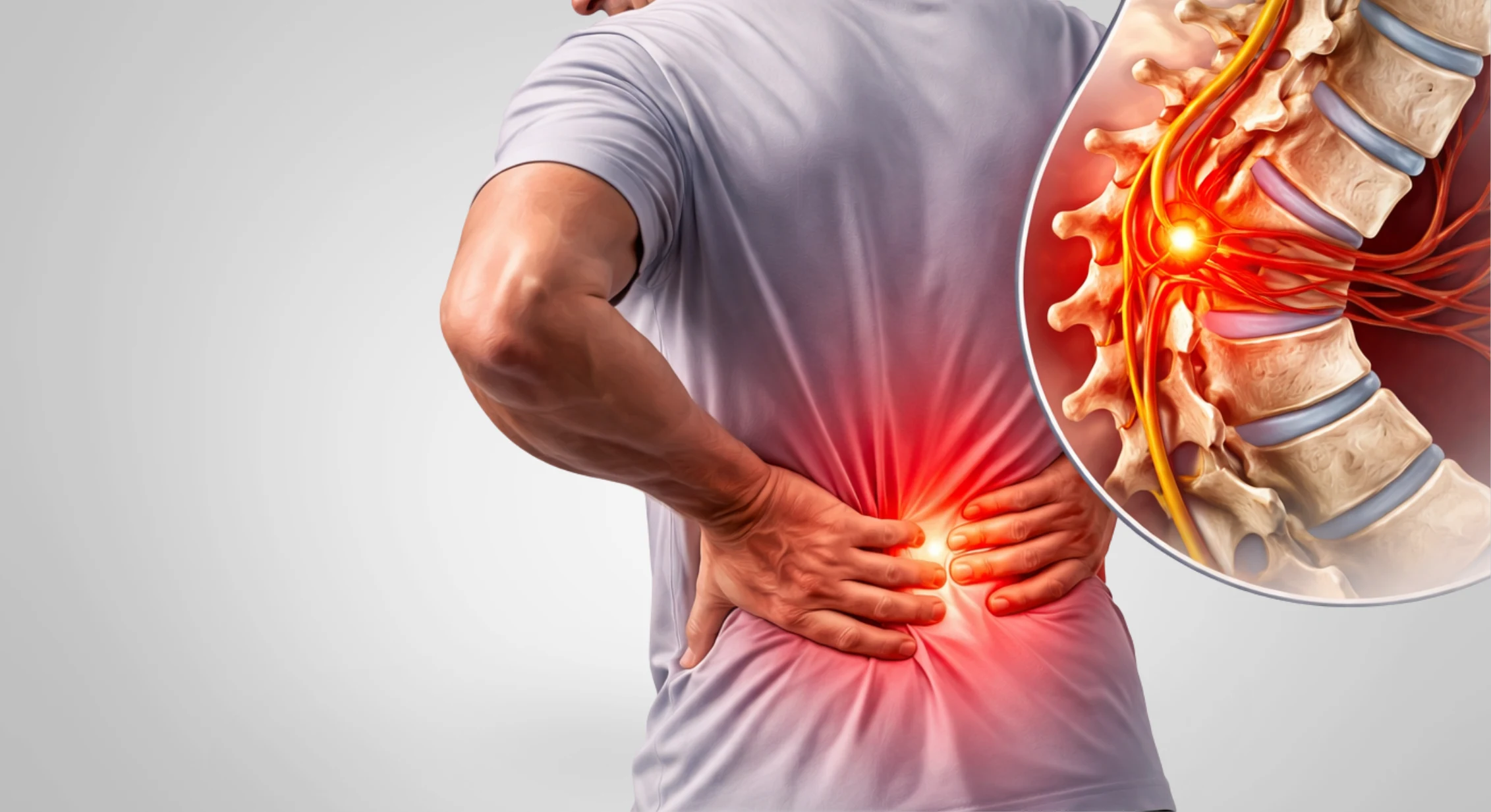
What Happens in a Slipped Disc?
In a slipped disc:
- The outer covering weakens or tears
- The inner soft material bulges out
- Nearby nerves get compressed
This nerve pressure causes pain and other symptoms. Learn more about herniated disc treatment.
Common Causes of Slipped Disc
1. Age-Related Wear and Tear
- Discs lose water content with age
- Become less flexible
- More prone to injury
2. Sudden Lifting or Twisting
- Heavy lifting without proper technique
- Sudden jerky movements
3. Poor Posture
- Long sitting
- Slouching
- Incorrect bending habits
4. Weak Core Muscles
- Poor abdominal and back muscle strength
- Increased stress on discs
Symptoms of a Slipped Disc
Symptoms depend on which nerve is affected.
Common Symptoms
Severe Symptoms (Need Urgent Care)
- Progressive weakness
- Loss of bladder or bowel control
How Is a Slipped Disc Diagnosed?
Diagnosis includes:
- Detailed clinical examination
- MRI scan (if pain persists or nerve symptoms exist)
MRI helps confirm disc location and nerve involvement.
Treatment Options for Slipped Disc
Conservative Treatment (First Choice)
- Pain-relief medications
- Physiotherapy
- Activity modification
- Posture correction
👉 80–90% of patients improve without surgery
Advanced Non-Surgical Options
- Epidural or nerve block injections
- Targeted spine rehabilitation
When Is Surgery Needed?
Surgery is considered if:
- Pain does not improve after weeks of treatment
- There is significant nerve weakness
- Bladder or bowel problems occur
When surgery is needed, spinal decompression surgery or minimally invasive discectomy can provide relief.
Recovery and Healing Time
- Mild cases: a few weeks
- Moderate cases: 6–8 weeks
- Post-surgery (if needed): faster recovery with modern techniques
Can Slipped Disc Be Prevented?
Yes, by:
- Maintaining good posture
- Regular exercise and core strengthening
- Avoiding sudden heavy lifting
- Maintaining healthy body weight
Frequently Asked Questions
Is slipped disc permanent?
No. Many discs heal or shrink with treatment.
Can a slipped disc heal on its own?
Yes, in many patients with rest and physiotherapy. Many patients also find relief with sciatica treatment when the disc causes nerve compression.
Is bed rest recommended?
Short rest is fine, but prolonged bed rest is not advised. Back pain management often includes gentle movement and exercise.
Does slipped disc always need surgery?
No. Surgery is required only in a small number of cases. Most patients improve with conservative slipped disc treatment.
Call to Action
If you have persistent back or leg pain, early evaluation by a spine specialist like Dr. Vishal Kundnani can help confirm the diagnosis and prevent complications. Consult at Bombay Hospital or Lilavati Hospital in Mumbai. Book your consultation today.
Medical Disclaimer
This information is for educational purposes and does not replace professional medical advice.